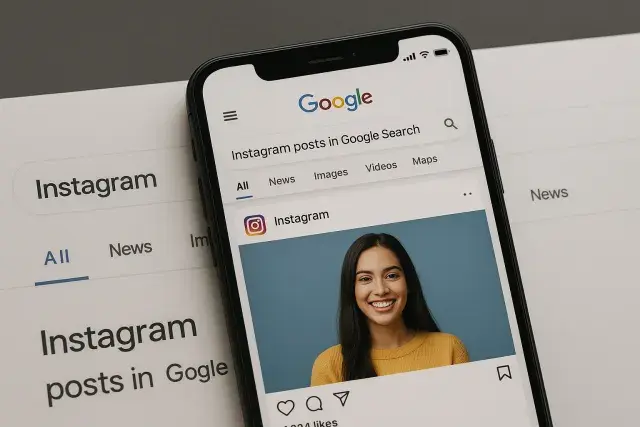
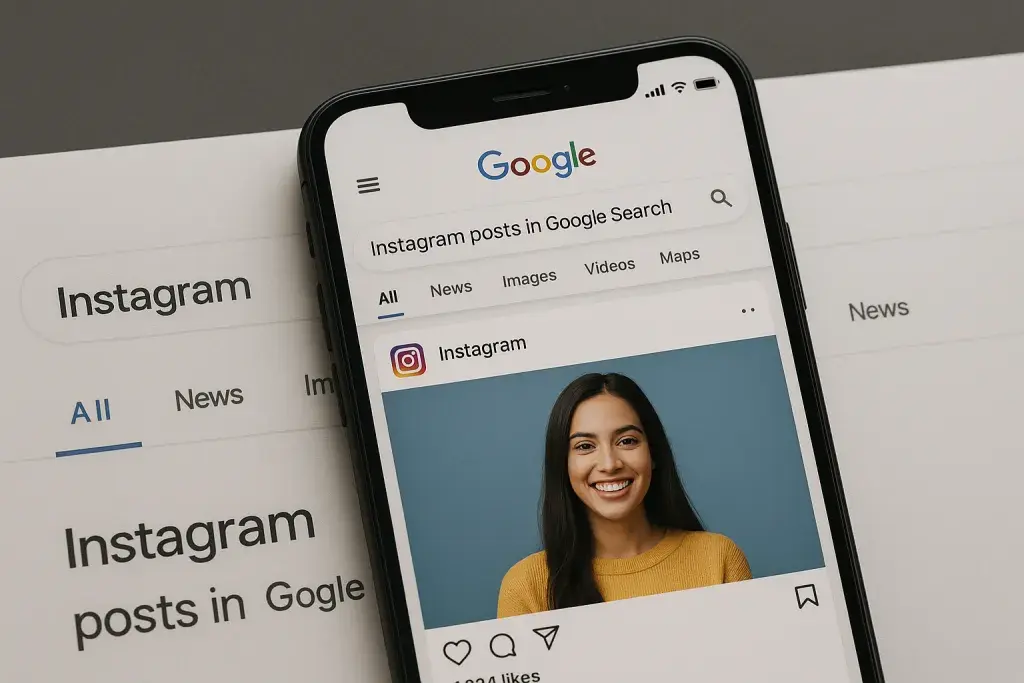
Type a username into a browser and something unexpected happens: an Instagram post shows up before you ever open the app. No login, no scrolling through Stories, just a photo and caption sitting quietly in a results page. This isn't a glitch or a one-off fluke - it's a pattern that has been building for a while, and it changes how people discover, verify, and interact with social content without touching the platform itself.
This piece walks through what actually happens when Instagram content surfaces outside its native app, based on direct testing across different account types, query styles, and devices. Some results were predictable. Others weren't. Along the way, plenty of people have started experimenting with tools that claim to influence visibility or engagement, and one worth mentioning is the boost fluence instagram viewer, which some users turn to when trying to make sense of how follower activity and reach correlate with discoverability outside the app.
What follows is a grounded look at the mechanics, the recent shifts, and the practical decisions creators and brands now face. No speculation dressed up as certainty - just what's observable, what's changed, and what it means for anyone paying attention to how social content behaves once it leaves its home platform.
What Does "Instagram Posts in Google Search" Actually Mean?
At its core, this refers to public Instagram content - posts, profiles, sometimes Reels - appearing directly within search results, without the user needing to open Instagram itself. A caption, a thumbnail, occasionally a snippet of engagement context, all rendered in the results list like any other web page. It's a small shift in behavior, but it carries weight: content that once lived exclusively inside a closed app now has a presence in open results.
The distinction matters because Instagram has never been fully "closed." Public accounts have long allowed some content to be crawled and indexed, but visibility has been inconsistent, often depending on factors outside a typical user's control. What's changed recently is the frequency and predictability of this indexing - posts that once required a direct link now sometimes appear organically when someone searches a username, hashtag, or even a specific phrase from a caption.
- Public profile pages, including bio text and follower counts in some cases
- Individual posts with captions, especially when they contain distinctive or searchable phrases
- Occasionally, Reels with partial preview text or captions
- Hashtag-based aggregation pages, though these behave less predictably than direct profile or post links
How Indexing of Public Instagram Content Works
For any of this to happen, the account has to be public - private accounts remain entirely invisible outside the app, regardless of how popular or active they are. Beyond privacy settings, indexing tends to favor accounts with consistent activity, complete profile information, and posts that include text-rich captions rather than image-only content with no accompanying words. A photo with no caption gives very little for indexing systems to work with. A caption that reads like a mini-article, on the other hand, gives crawlers something substantial to catalog.
Engagement also plays a quiet role. Accounts with steady interaction - comments, shares, consistent posting schedules - appear to surface more reliably than dormant or sporadically updated ones. This isn't confirmed as an official ranking factor, but it's a pattern that shows up repeatedly across test searches.
The Difference Between Profile Results and Post-Level Results
One of the more confusing aspects for casual users is why a profile might appear in results while individual posts from that same account don't, or vice versa. Profile-level results tend to be more stable - they function similarly to a business listing, summarizing the account rather than surfacing specific content. Post-level results are more volatile, often tied to recency, caption relevance, and how closely a search phrase matches the actual wording of a post.
This inconsistency is precisely why two people searching the same brand name on different days can get noticeably different results. It's not a bug - it's a reflection of how dynamic post-level indexing tends to be compared to the relatively static nature of profile pages.
Hands-On Testing: What We Found Searching for Instagram Posts
Running a series of test searches across brand accounts, personal profiles, and hashtag queries revealed clear behavioral differences depending on query type. Searching a well-known brand name typically surfaced the profile page reliably, often alongside one or two recent posts. Personal accounts with lower engagement showed up far less consistently, and in several cases, didn't appear at all despite being fully public.
Hashtag searches produced the most unpredictable results. Rather than showing a clean aggregation of posts under that hashtag, results skewed toward whichever individual posts happened to have the strongest caption match or the most recent activity. This suggests that hashtag-based discovery outside the app still lags behind the more structured discovery available inside Instagram itself.
| Query Type | Typical Result | Consistency |
|---|---|---|
| Brand or business username | Profile page plus occasional recent post | High |
| Personal account username | Profile page only, sometimes absent entirely | Low to moderate |
| Hashtag search | Scattered individual posts, no clean aggregation | Low |
| Specific caption phrase | Direct post match if caption is distinctive | Moderate to high |
A few variables consistently influenced whether results appeared at all. Account privacy remained the single biggest determinant - no amount of engagement or posting frequency overcomes a private setting. Beyond that, posting regularity and caption length both seemed to correlate with better visibility, though neither guarantees it outright.
What's New in 2026: Updates and Changes to Watch
The most recent shift worth noting involves the frequency and consistency of indexing rather than any dramatic overhaul of the feature itself. Instagram posts in Google Search 2026 behave more predictably than they did just a couple of years earlier, with profile pages surfacing more reliably and post-level results showing up with less lag between publishing and appearing in results. This isn't a wholesale transformation - it's an incremental tightening of a system that was already partially in place.
Recent coverage and community discussion around instagram posts in google search news has focused heavily on this improved consistency, along with occasional reports of caption text becoming more prominently featured in result previews. Whether this represents a permanent shift or a temporary rollout phase isn't something that can be stated with full certainty, but the pattern has held steady across repeated testing.
- More consistent profile-level indexing across public accounts of varying sizes
- Reduced lag time between a post going live and appearing in search results
- Increased visibility of caption text within result previews
- Continued unpredictability around hashtag-based aggregation
Anyone relying on unverified claims about this instagram posts in google search update should treat rumor and confirmed behavior as separate categories. What's observable through direct testing is reliable; what circulates as speculation about future plans is not, and shouldn't be treated as settled fact.
Regional and Platform Rollout Differences
Testing across different devices showed minor but noticeable differences between mobile and desktop result presentation. Mobile results tend to compress post previews more aggressively, sometimes truncating captions to a single line, while desktop results occasionally show slightly more context. Regional differences are harder to confirm with confidence, since testing across multiple countries wasn't part of this hands-on process, but anecdotal reports suggest the core behavior remains fairly consistent across major markets.
What This Means for Search Visibility Trends
The broader pattern here points toward social content becoming more porous - less confined to its originating app and more woven into general discovery behavior. This isn't unique to Instagram, but the pace at which its public content now surfaces elsewhere is a meaningful data point for anyone tracking how platforms balance openness with control over their own ecosystems.
Why This Matters for Creators, Brands, and Everyday Users
For creators and small businesses, this shift represents a low-effort visibility channel that didn't exist in the same form a few years ago. A well-optimized public profile now has a reasonable chance of appearing to someone who has never opened Instagram, simply because they searched a relevant term or business name. That's a meaningful shift in how discovery happens, particularly for local businesses or independent creators who rely on organic reach rather than paid promotion.
Brands managing customer-facing accounts face a different consideration: consistency. If a profile appears in results but hasn't posted in months, that stale impression can undercut credibility just as easily as no presence at all. The instagram posts in google search update effectively raises the stakes for keeping public-facing content current, since visibility now extends beyond the app's own audience.
- Creators: increased organic discovery potential, but only with active, caption-rich posting habits
- Businesses: a need to treat public profiles as an extension of their broader online presence, not a separate silo
- Everyday users: growing awareness that public account settings carry consequences beyond the app itself
Some users, particularly those trying to understand how engagement patterns influence broader visibility, experiment with third-party tools like the boost fluence instagram viewer to get a clearer picture of follower behavior and reach. These tools should be approached with a critical eye - they can offer useful perspective on engagement trends, but they don't override the underlying account settings and posting habits that actually determine whether content becomes discoverable outside the app.
How to Optimize or Control Your Instagram Visibility in Google Search
For those who want their content to appear more reliably, or conversely, want tighter control over what's visible, a handful of concrete steps make a measurable difference. These aren't guarantees, but they align with the patterns observed during testing.
- Confirm the account's privacy setting matches the intended visibility - public if discoverability is the goal, private if it isn't.
- Write captions with clear, descriptive language rather than relying solely on emojis or abbreviations, since text-rich captions index more reliably.
- Keep the profile bio complete and current, as it often appears in profile-level results.
- Post consistently rather than in irregular bursts, since posting regularity correlates with steadier visibility.
- Periodically search your own username and relevant captions to check what currently surfaces.
Anyone concerned about privacy should treat the "public" setting as a genuine trade-off rather than a formality. Once an account is public, captions, bio text, and post previews become fair game for indexing - there's no partial middle ground where only some content is exposed while the rest stays hidden.
Common Misconceptions and Mistakes to Avoid
A recurring misunderstanding is the assumption that private posts might still leak into results under certain conditions. They don't. Privacy settings function as a hard boundary, not a soft filter that occasionally lets content through. Another frequent mix-up involves confusing in-app search with browser-based search - the two operate on entirely different systems, and a post being easy to find inside Instagram says nothing about whether it will surface outside it.
- Assuming private accounts have any chance of appearing in results under specific circumstances
- Confusing Instagram's internal search function with external browser results
- Ignoring caption quality, then wondering why a visually strong post never surfaces
- Expecting hashtag searches to behave as cleanly as they do inside the app itself
The myth that engagement alone guarantees visibility is also worth addressing directly. High likes and comments correlate with better odds of appearing in results, but they don't override a private setting or compensate for a caption with no descriptive text. Visibility depends on a combination of factors working together, not any single metric in isolation.
Questions and Answers
Can private Instagram posts ever appear in search results?
No. Private accounts are excluded entirely from external indexing, regardless of follower count, engagement, or posting frequency. The privacy setting functions as a complete barrier, not a partial filter.
Why does my profile show up but none of my individual posts do?
Profile-level indexing tends to be more stable and less dependent on recent activity, while post-level indexing is more volatile and often tied to caption relevance and recency. A profile can be indexed consistently even when specific posts fluctuate in and out of visibility.
Is this behavior the same everywhere in 2026?
Core behavior appears fairly consistent across major markets and both mobile and desktop, though minor formatting differences exist between platforms. Regional variation hasn't been extensively tested here, so some differences may exist that weren't captured in direct observation.
Does this change how businesses should think about their Instagram strategy?
Yes, in a practical sense. A public business profile now functions as an extension of general online visibility, not just an in-app presence, which makes consistent posting and complete profile information more important than before.
How can I quickly check if my own account is currently discoverable?
Search your username directly, along with a distinctive phrase from a recent caption. If the profile or post appears, that confirms current indexing; if it doesn't, revisit privacy settings and caption content before assuming something is broken.
Will visibility continue expanding beyond what's happening now?
The trend toward more consistent indexing has been building steadily, but any claims about future expansion remain speculative until confirmed through direct, observable changes rather than rumor or informal reports.